

Brain on, fun on
Three books and the joy of working through it

Jonesish is a reader-supported publication. If you enjoy what you’ve read and want to support me, please like and share, or subscribe to get further updates. Thank you!
Last year, I read a stack of pulpy, silly books. I doubled my reading goal—well over a hundred—and it felt like a worthy achievement. To share, at least. Now they are all a blur; I couldn’t tell you a character’s name or a relevant plot point. I was reading, but not really reading, ya know? Brain off, fun on.
This year, I wanted to try something different, which would mean reading less but enjoying more.
I read 3 books from January to April:
The House of the Dead: Siberian Exile Under the Tsars by Daniel Beer
Anna Karenina by Leo Tolstoy (Louise & Aylmer Maude translation)
Crime and Punishment by Fyodor Dostoyevsky (Oliver Ready translation)
“Wow, CJ,” you say, “I didn’t know you liked late Imperial Russia so much?”, to which I reply, “I don’t!” One book led to another, until I was in a swirl of Russian literature that’s still ongoing (I’m currently reading The Master and Margarita.)1
These books look hard by the page numbers alone: 512, 813, and 702 respectively. Anyone would see those thick books and think: I don’t have time for that, or my brain can’t handle that right now. I thought the same, which is how I ended up with all my fun reads last year!
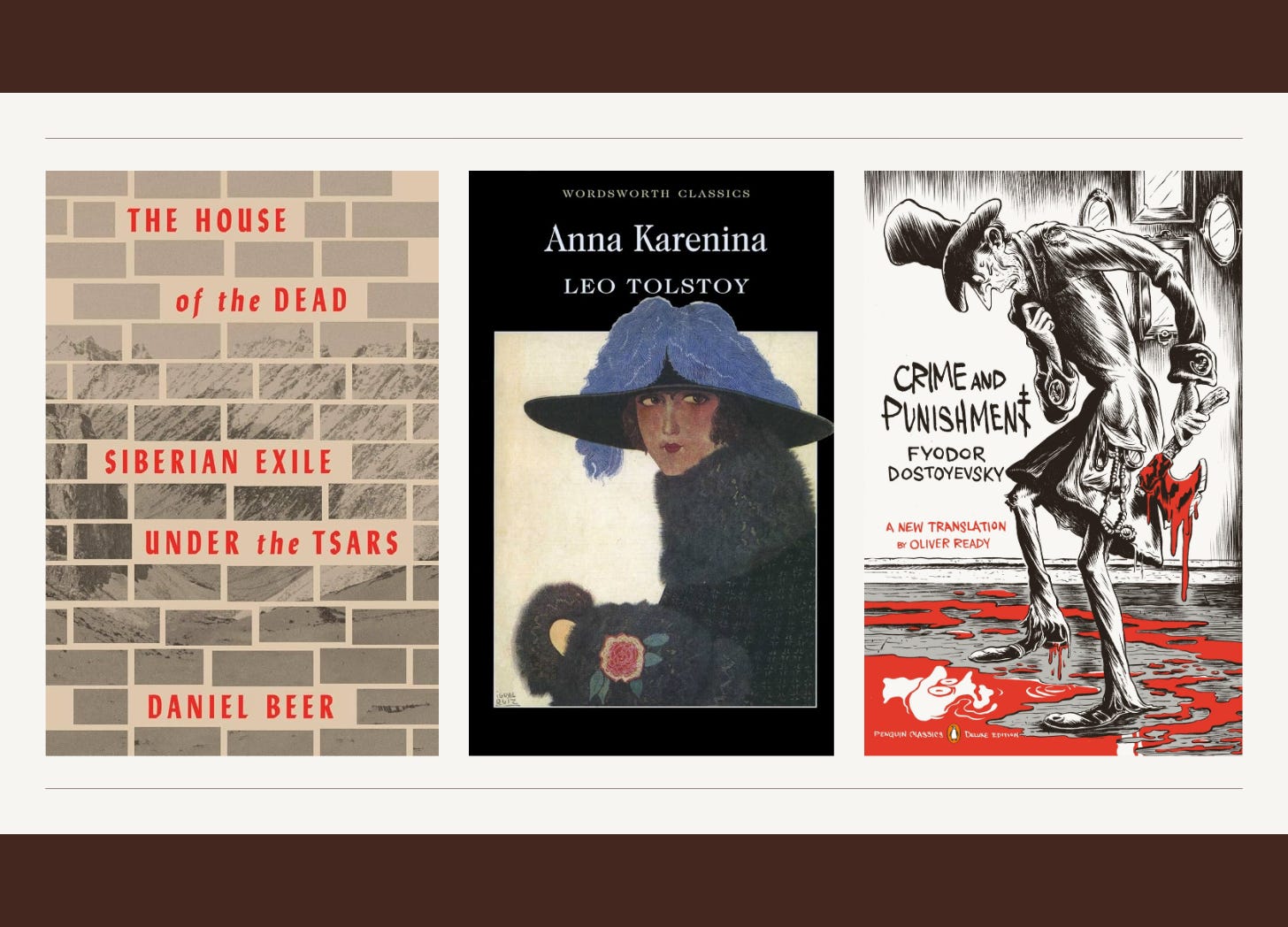
I started the year with Beer’s The House of the Dead because I like nonfiction, and I like something that throws me out of the day-to-day. I also just really liked the cover. I learned about Dostoyevsky’s exile to Siberia, and how Crime and Punishment was written after he returned.
I’d never read Dostoyevsky, but I’d loved Tolstoy. I read War and Peace a couple years ago, but the book that kept lingering for me was Anna Karenina. I was in a stretch where I was struggling to write. Reading a classic would invigorate me, right?
It was just as good the second time around. Anna’s paranoia, Levin and Kitty’s love story, Oblonsky! I wanted more of the same feeling. I tried to find it by going deep into the novel (Tolstoy’s diaries, Sophia’s diaries, a making-of book I didn’t care for), but it wasn’t the same. But going deep led me to essays and lectures comparing Tolstoy and Dostoyevsky. It felt like another sign that I should finally pick up Crime and Punishment.
Until recently, I’d only read the Wikipedia synopsis of Crime and Punishment. Side note: even that sounds so archaic, when now you can search for a summary, or type a prompt and get the book explained exactly the way you want. What’s the point of struggling through a 700 page book, right?
Cue stage direction of me clutching my pearls, but in a good way. Reading something that good for the first time? Gasp! Raskolnikov’s mind, the drama of Dunya’s engagement, Sonya’s life, the grime backdrop of Saint Petersburg. I was hooked!
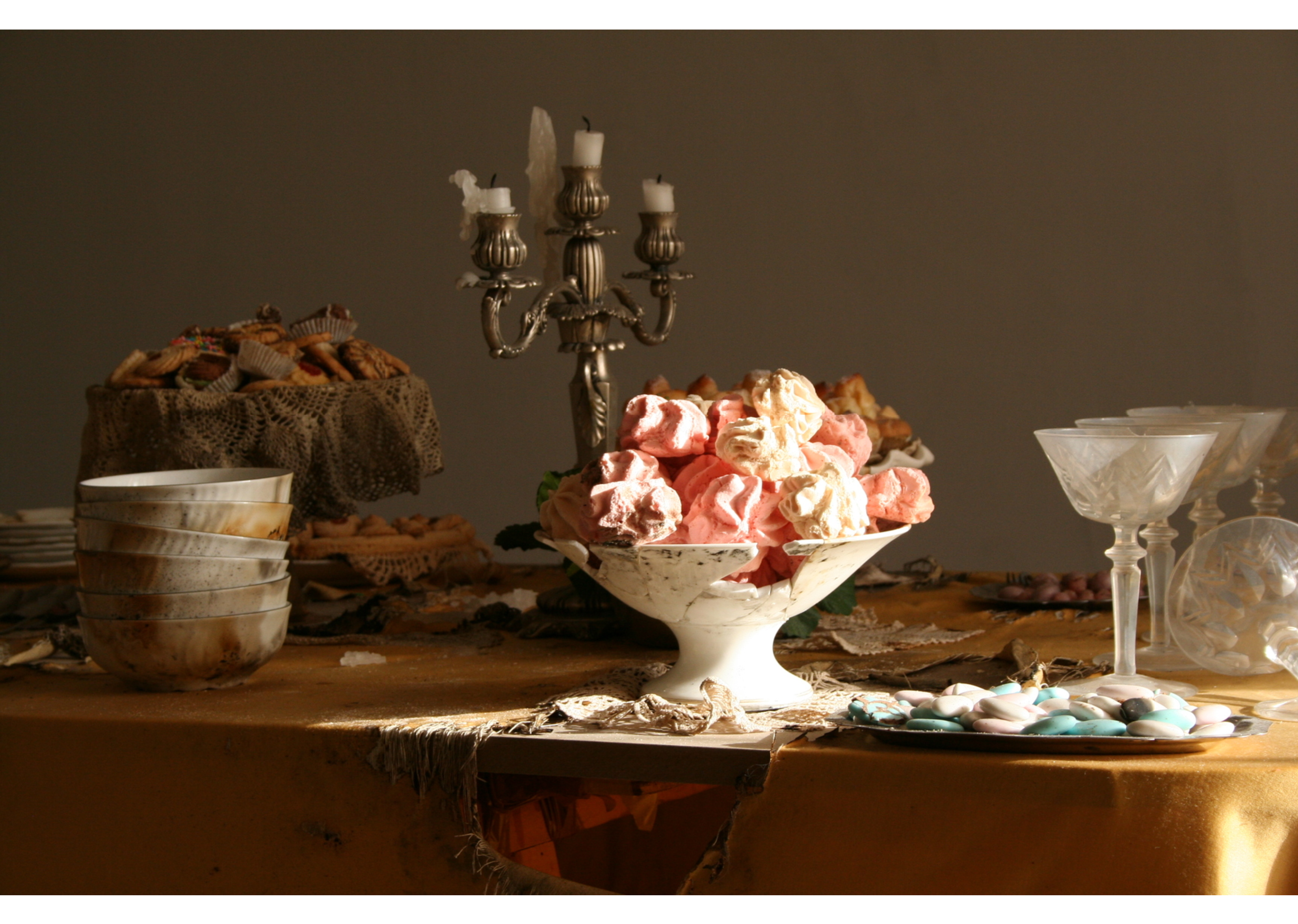
I kept turning to these hefty reads after work. Some nights were a breeze, other nights I was struggling to get through a paragraph. But I knew they’d give me something in return. Like a delicious dessert, with all the ingredients working together; not too sweet, too rich, too sour; something you drag out so you don’t accidentally end a good thing too soon.
Effort is not an inherently bad thing. Ease is delightful, but has a hangover. It becomes numbing. Challenge, done willingly, makes me feel more alive. That’s not to say life needs to be, nor should be difficult. It’s that, in some areas, a bit of ‘working through it’ is actually good for you. That’s how I feel writing this essay. In theory, I could have jotted down some bullet points and run it through an essay writing agent with my context. That would have produced an essay, but nowhere near this one; it’s morphed twenty different ways since my original idea because I’m working through my thoughts.
Some of us live with an unusual amount of ease in daily life, almost too much. Effort is what we want to actively avoid. Almost every new startup or product we’re fed optimises a subsection of our lives that we, of course, will pay for to get the convenience and comfort. That’s part of the hope with AI, from someone working in it.
The promise, the story, sounds like a post-work fantasy we can all get behind, right? Free workers from alienated, repetitive labor, and they’ll redirect that energy toward something more human: creativity, connection, depth. A knowledge worker has so many tasks that are arduous.2 The hour you save reading that long doc will go towards something more fruitful. Our precious time! Save it!
I don’t know about you, but that’s not what happens to me. My shortcuts are coupled with exhaustion. Yes, I have more time for my creative things, but in the back of my head, there’s a worry that I should be doing something “productive.”
Byung-Chul Han describes this as the cruel irony of our achievement society: we are our own taskmasters. It’s that nagging sense that the time we just saved should be used towards something worthy, something to increase your value: improve your skills, create output, improve your health, elevate your status, give yourself a future towards something. If you’re not constantly moving, then what are you doing?

Han speaks about our modern society, but Raskolnikov was dealing with the same question in 19th century Russia3. A timeless feeling because it touches a classic question: what makes us happy? And right now, that inner sense is being squeezed by the outside world.
Aristotle might say the problem is that we’ve mistaken eudaimonia, flourishing, as a feeling or an outcome. Instead, it should be viewed as an activity, practiced over a whole lifetime. It shows up in the quality of your attention, your character, the habits you build, and your willingness to keep becoming capable of more: a practiced attentiveness to being alive.
I’m trying to be fully active. There’s so much temptation to optimise whatever we can because we can. That’s fine if you want to—maybe you genuinely have too many things that need it—but I don’t want to default to efficiency for everything. I don’t want to treat reading, my beloved hobby, like an achievement treadmill, go, go, go. No more book counts or page goals.
At work, the treadmill looks different, but it feels the same. It’s the urge to reply quickly instead of thoughtfully. To skim a doc so you can react, rather than actually understand it. To send a flurry of messages that create a sense of productivity. I want to bring craft and care into my work. Sometimes I catch myself treating my co-workers like a checklist or an inbox to clear through, rather than the actual human beings they are! Wild!
I always feel silly when I have epiphanies like this. It makes me feel like an alien learning the ways of Earth. Does everyone else already know this, and I’m the only one figuring it out now? But I think this is what Aristotle meant: flourishing is an active practice. It is the ongoing work of questioning and reviewing.
Brain on, fun on.
Thanks for reading ❤️ I write personal essays and advice on Jonesish and fiction on Meanwhile, in the Milky Way.
My latest story, The Personal Log of Archi Ul, is a novelette about a by-the-book regulator sent to the far-reaches of the Milky Way.
One could even say… Marxian?
This is why reading is the best hobby ever. Objectively, obviously. No matter where or when a book was written, you can watch the same question play out through different characters and circumstances. It is a way to chew on a question.